Thursday, September 27, 2012

Wednesday, September 26, 2012
First Impression of Wandering and Wondering
Just from the beginning of I Wonder as I Wander by Langston Hughes, I can tell I am going to love this book. We've read some poems by Hughes in class and of course he is an amazing writer. This is, of course, translated in his memoir. When we looked at him poems in class it was always just that - looking at his work and what it meant and what he meant and what it all meant but never who Langston Hughes was. My first impression from reading his memoir is that I can tell he's a person. A real, living, feeling person and not just a name below the title of a poem. After I read this memoir I can tell that I will have a different perspective on Hughes' writing and will definitely try to read more of his work to complement the memoir. He says himself that writing "put [his] inner emotions into exterior form, and gave [him] an outlet for words that never came into conversation"(3). This makes me even more interested in reading more of his poetry to see if I can recognize aspects from his life events and emotions reflected in his work.

Monday, September 24, 2012
Q as in Quotation
The essay "Q as in Quotation" presented a negative and a positive side of using quotations in writing and, frankly, was rather confusing. The author used lots of big words that I didn't know so I looked them up at Dictionary.com in the hopes that everything would make sense afterwards.
Semantic: Different meanings of words or other symbols of language; from Semantics: the study of meaning or linguistic development
Capitulation: Surrender
Riven: Distressed
Caesura: A break in a metered verse
Tacit: Implied or understood without being stated
Presupposition: Something assumed beforehand, taken for granted in advance
Expressivity: The quality or state of being expressive
Kowtow: Act of obedient or compliance
Jurisprudence: The science or philosophy of law
Sublime: Elevated or lofty
Coercion: Using force or intimidation to obtain compliance
Undialectical: from Dialect: the practice of logical discussion to investigate the truth of a theory or opinion
Filiation: Decent from a parent, the relationship of one thing to the thing that it came from
Sovereign: Supreme rank, power, or authority
Stenographer: A person who specializes in taking dictations
Impoverish: To reduce something in quality, to exhaust the strength
Credo: A formula of belief
Barter: A trade by exchange of commodities
Rapprochement: Establishment of harmonious relations
Erudition: Knowledge acquired by study or research
After that was done the text was still complex, but at least I knew what the author was saying. He or she begins the essay claiming that the use of quotations is a bad thing, comparing it to "cutting one's own flesh" and complete submission. The author states that if you use quotations, "the reader will see you only as surrounded by alien prompters" and that "he who quotes capitulates." These are all very negative images and claims, yet in the second half of the essay he or she changes their stance. At the end of the essay, the author states that "quotation opens up an in-between space for encounters" and is necessary for the exchange of thoughts. The author then praises quotation for being the clear "in-between space that allows identities to circulate in dialogue." This essay shows two sides of using quotation in writing and how it can be positive as well as negative.
This is related to what we've been talking about in class as far as embedding quotations and using them properly. It shows how quotations can be good for your writing as well as bad and that writers should be aware of this fact whenever quoting a source.
Semantic: Different meanings of words or other symbols of language; from Semantics: the study of meaning or linguistic development
Capitulation: Surrender
Riven: Distressed
Caesura: A break in a metered verse
Tacit: Implied or understood without being stated
Presupposition: Something assumed beforehand, taken for granted in advance
Expressivity: The quality or state of being expressive
Kowtow: Act of obedient or compliance
Jurisprudence: The science or philosophy of law
Sublime: Elevated or lofty
Coercion: Using force or intimidation to obtain compliance
Undialectical: from Dialect: the practice of logical discussion to investigate the truth of a theory or opinion
Filiation: Decent from a parent, the relationship of one thing to the thing that it came from
Sovereign: Supreme rank, power, or authority
Stenographer: A person who specializes in taking dictations
Impoverish: To reduce something in quality, to exhaust the strength
Credo: A formula of belief
Barter: A trade by exchange of commodities
Rapprochement: Establishment of harmonious relations
Erudition: Knowledge acquired by study or research
After that was done the text was still complex, but at least I knew what the author was saying. He or she begins the essay claiming that the use of quotations is a bad thing, comparing it to "cutting one's own flesh" and complete submission. The author states that if you use quotations, "the reader will see you only as surrounded by alien prompters" and that "he who quotes capitulates." These are all very negative images and claims, yet in the second half of the essay he or she changes their stance. At the end of the essay, the author states that "quotation opens up an in-between space for encounters" and is necessary for the exchange of thoughts. The author then praises quotation for being the clear "in-between space that allows identities to circulate in dialogue." This essay shows two sides of using quotation in writing and how it can be positive as well as negative.
This is related to what we've been talking about in class as far as embedding quotations and using them properly. It shows how quotations can be good for your writing as well as bad and that writers should be aware of this fact whenever quoting a source.
Friday, September 7, 2012
Tone When on Fire
The climax of the story is when Brent lights himself on fire; the reader knows that that is what the first part of the story is building up to and that is what the memoir is centered around. However, for being the main focus of a 319 word novel, this entire scene is about two pages long and Brent is on fire for a paragraph. And that's it.
What is also interesting about the scene is the way in which it is presented by the writer. There is description of the pain, "all over me, eating through me... This hurts too much," but there is no extreme pathos in this description as I had been expecting (17). It is brief and to the point. Sentences are straightforward: "I fall down. I'm going to die... I unlock the door and open it. My hand is all black. I walk out" (17). The scene feels dream-like, as if it is not really happening. The short sentences add to the surreal feeling because the action seems to float along.
The tone is really what makes this scene feel so surreal. It feels like a dream to the reader because the author is talking about it as if it were a dream. He describes everything almost objectively. Even the parts concerning pain seem to have little involvement from the author. It does not feel like you are reading someone describe the time when they set himself or herself on fire. It feels like you are reading someone describe someone else being on fire, but the person doing the describing is a machine.
The details presented are matter-of-fact. Nothing is gloomy or shocking and the description is very objective for such an intense experience. Taking both of these into account, my final judgement on the tone would be that it is matter-of-fact, which is incredible because we're talking about someone lighting themselves on fire here. I think that as Brent went through the actions it must have felt very matter-of-fact for him at the time so it wouldn't make sense for the author to embellish it with loads of pathos upon remembering it. Honestly he probably didn't want to. As a reader, I'm glad he didn't. The author's apparent removal from the scene makes it easier for a reader to stomach what is happening in the scene and to not throw the book out the window because reading about a fourteen-year-old being on fire is not a comfortable experience. In this sense, the tone of the on-fire scene is realistic in the sense that it is probably exactly how fourteen-year-old Brent felt at the time but also comfortable for the reader to understand and the author to write about.
What is also interesting about the scene is the way in which it is presented by the writer. There is description of the pain, "all over me, eating through me... This hurts too much," but there is no extreme pathos in this description as I had been expecting (17). It is brief and to the point. Sentences are straightforward: "I fall down. I'm going to die... I unlock the door and open it. My hand is all black. I walk out" (17). The scene feels dream-like, as if it is not really happening. The short sentences add to the surreal feeling because the action seems to float along.
The tone is really what makes this scene feel so surreal. It feels like a dream to the reader because the author is talking about it as if it were a dream. He describes everything almost objectively. Even the parts concerning pain seem to have little involvement from the author. It does not feel like you are reading someone describe the time when they set himself or herself on fire. It feels like you are reading someone describe someone else being on fire, but the person doing the describing is a machine.
The details presented are matter-of-fact. Nothing is gloomy or shocking and the description is very objective for such an intense experience. Taking both of these into account, my final judgement on the tone would be that it is matter-of-fact, which is incredible because we're talking about someone lighting themselves on fire here. I think that as Brent went through the actions it must have felt very matter-of-fact for him at the time so it wouldn't make sense for the author to embellish it with loads of pathos upon remembering it. Honestly he probably didn't want to. As a reader, I'm glad he didn't. The author's apparent removal from the scene makes it easier for a reader to stomach what is happening in the scene and to not throw the book out the window because reading about a fourteen-year-old being on fire is not a comfortable experience. In this sense, the tone of the on-fire scene is realistic in the sense that it is probably exactly how fourteen-year-old Brent felt at the time but also comfortable for the reader to understand and the author to write about.
Talking About Tone
Near to the end of the book, Brent has yet another new psychologist named Mark Nusbaum. The tone in this scene is difficult to determine because, although the reader is very aware of how Brent feels at the moment, the view of the writer towards the scene is not immediately apparent.
Brent in the scene is annoyed and unhappy; he does not want to be there. His first thoughts regarding the doctor are "another Mark, another mustache," he is not impressed (240). Further on through their conversation he becomes more and more agitated: "Jesus, I am so fucking sick and tired of the fucking psychologists and their stupid little games to try and figure out what's going on inside my head. If they really want to know, they should just ask me" (240).
Despite young Brent's obvious frustration, the writer's tone towards the subject does not appear to be frustration. The tone of this scene is best described as either sarcastic or neutral; the author does not continue to feel the anger he felt towards this scene when it actually happened. The scene is presented as a dialogue with minimal narrative. What the author does include is Brent's thoughts towards what the psychologist is asking him to do. This information is presented almost matter-of-factly: here's what happened and what was said and nothing more. However, by the narrative of what goes on in Brent's head, the author seems to almost be mocking his younger self and the instant rebellion against everything that characterized his thoughts. The writer is not critical or ashamed, he is just aware of how juvenile his thoughts were at the time and presenting them with this knowledge gives the scene a slightly sarcastic tone.
I think this tone is appropriate according to the context of the scene. It does not change, and I don't think it should. Imagine writing about the thoughts that ran through your mind ten years ago - probably not your proudest moments. I believe the case is the same for Runyon. However, as he is spending an entire novel discussing the inner working of his teenage self, he chooses to be sarcastic instead of ashamed. Of course he can see how dumb he sounds now, yet he presents his rebellious mindset truthfully. Though, with any writing, the author always has an opinion on what he is writing about. In this case, the Runyon cannot help but let a little of his critical sarcasm towards his younger self come through his writing.
Brent in the scene is annoyed and unhappy; he does not want to be there. His first thoughts regarding the doctor are "another Mark, another mustache," he is not impressed (240). Further on through their conversation he becomes more and more agitated: "Jesus, I am so fucking sick and tired of the fucking psychologists and their stupid little games to try and figure out what's going on inside my head. If they really want to know, they should just ask me" (240).
Despite young Brent's obvious frustration, the writer's tone towards the subject does not appear to be frustration. The tone of this scene is best described as either sarcastic or neutral; the author does not continue to feel the anger he felt towards this scene when it actually happened. The scene is presented as a dialogue with minimal narrative. What the author does include is Brent's thoughts towards what the psychologist is asking him to do. This information is presented almost matter-of-factly: here's what happened and what was said and nothing more. However, by the narrative of what goes on in Brent's head, the author seems to almost be mocking his younger self and the instant rebellion against everything that characterized his thoughts. The writer is not critical or ashamed, he is just aware of how juvenile his thoughts were at the time and presenting them with this knowledge gives the scene a slightly sarcastic tone.
I think this tone is appropriate according to the context of the scene. It does not change, and I don't think it should. Imagine writing about the thoughts that ran through your mind ten years ago - probably not your proudest moments. I believe the case is the same for Runyon. However, as he is spending an entire novel discussing the inner working of his teenage self, he chooses to be sarcastic instead of ashamed. Of course he can see how dumb he sounds now, yet he presents his rebellious mindset truthfully. Though, with any writing, the author always has an opinion on what he is writing about. In this case, the Runyon cannot help but let a little of his critical sarcasm towards his younger self come through his writing.
Thursday, September 6, 2012
Lyrics
 Brent is always relating his feelings with lyrics of popular songs from the Beatles or Michael Jackson. The music always seems to come up when he's feeling something that he is not sure how to express.
When Brent sees "the other burned kid, Harry" he is very disturbed: "Jesus, what a freak. It makes me feel sick to look at him" (165). Suddenly, words from Michael Jackson's song Man in the Mirror pop into Brent's head.
I'm starting with the man in the mirror/I'm asking him to change his ways.Brent wonders to himself why that song was in his head when he doesn't even like Michael Jackson, but to the reader the juxtaposition of those particular lyrics next to the description of the other burned boy is very clear. Brent attributes it to the fact that he had seen a commercial where Michael Jackson was on fire. To the reader it is clear that, as Brent looks at Harry, he is literally looking in a mirror. He is disgusted by the image because he does not realize how similar it is to his own.
 The Beatles are also quite relevant during Brent's experience. He listens to their tape in the car and he sings their lyrics to himself when he's in a stressful situation. In the car the lyrics he notices are about memories and change:
There are places I remember/All my life, though some have changed/Some forever, not for better/Som have gone, and some remain.In this scene Brent is not paying much attention to his father in the car with him but rather zoning out and listening to the music. This song and the lyrics strangely fit perfectly to Brent's situation, making me suspicious that the author really had no idea which song was playing in the car at that time and just looked up lyrics to Beatles' songs that would fit nicely with his story.
Brent stands in his closet, crying, with his head in the shirts. "[He] can't stop crying. [He] can't stop," the doctors had been in his room with his parents bringing up his past suicides and the things they had found in his bedroom at home (192). He is extremely stressed in this scene and he isn't able to come up with his own words to express his feelings, so he borrows the Beatles':
Help, I need somebody,/Help, not just anybody,/Help, you know I need someone, help.

We know that before the "accident" Brent really enjoyed hard, loud rock. However, when his family gives him an Aerosmith CD for Christmas he admits that "it's too noisy. [He] likes the Beatles better" (302). It makes a lot of sense that after such a shocking experience he would prefer more relaxed music to very loud and exciting music. I think he's had enough excitement for a while, and it's interesting to see this musical transition through the story.
Brent's Situation vs. Mean Girls
Brent has a strange dream about halfway though the novel that makes a deep impression on him; he cannot shake the awful feeling it leaves him with all day. He dreams that he is "driving a station wagon and [he's] going up to the top of a waterfall because [he's] got to get rid of these bodies. [He] killed them" and he feels such deep regret, yet he doesn't "remember why [he] did it" (174). This was a very strange dream for him to have because it's not as if he's being very violent or active in his current state. I think it must have been the guilt he feels for hurting so many people around him when he only really meant to hurt himself. This must have been the reason for his guilty feeling in his dream, that so many people have been affected by something that he never meant to drag on for so long. It was just a spontaneous decision and action and he didn't think of the consequences. However, now that he is faced with the consequences and has no option but to accept what he has done to himself and the people around him, Brent realizes that he has no only burnt himself but also his family and friends that he never wanted to hurt.
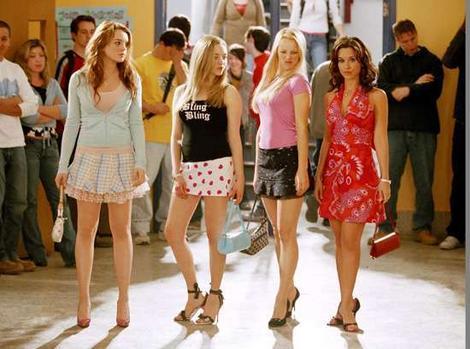
This train of events reminded me of a movie that one would not usually relate to a story about an eighth grader setting himself on fire, though it does contain a burn book. Mean Girls tells the story of a young girl, Cady, who comes into a new high school and is trying to fit in. She starts sitting with the popular girls because she's pretty so she fits in. It was just a small action on Cady's part that she thought was very harmless. Soon however, everything spirals out of control and she begins acting horribly and saying horrible things. In the end the entire school is involved and it all started from one little action that evolved in a way no one would have expected, much like Brent's situation.
This train of events reminded me of a movie that one would not usually relate to a story about an eighth grader setting himself on fire, though it does contain a burn book. Mean Girls tells the story of a young girl, Cady, who comes into a new high school and is trying to fit in. She starts sitting with the popular girls because she's pretty so she fits in. It was just a small action on Cady's part that she thought was very harmless. Soon however, everything spirals out of control and she begins acting horribly and saying horrible things. In the end the entire school is involved and it all started from one little action that evolved in a way no one would have expected, much like Brent's situation.
Sunday, September 2, 2012
Sacrilege
When Brent moves into DuPont and is just getting to know the people there and how things work, he sings a couple lines from the song "Imagine" in the shower one morning. The nurse, Rose, immediately makes a comment that "it's sacrilege" and he shouldn't sing it (153). Rose asks Brent, "How'd you like it if there was no heaven?" and he replies "fine with me," (153). Rose knows that Brent tried to kill himself by setting himself on fire, and she seems quite religious so she would also know that if you commit suicide you don't go to heaven. So why on earth would she ask him his thoughts on heaven? I realize this is a memoir and its not like there's hidden symbolism behind it or anything, but it got me thinking about Brent's views on God and when He appears in other moments of the text.
The narrator uses the phrase "oh God" very frequently in the story once you really start to pay attention. When he goes on his big date night with Tina to see a movie, Runyov exclaims "oh God, Bill Murray is so funny" and again "what is that? Oh God. That's not gasoline, is it?" (129, 130). One use is to express joy and the other is to express discomfort or dislike.
God comes up again when the narrator is masturbating in his room at Children's, Brent thinks "oh God. Oh God. Oh God," as he well, you know (113). Kind of an inappropriate place for God, but here the character brings Him up to express pleasure.
When Brent becomes extremely uncomfortable viewing the video of his parents discussing his accident and lying about the cause of his burns, God shows up again: "Oh God, I have this sudden tightness, this sticking feeling in my chest like I've been breathing Krazy Glue," (121). Here the character is expressing extreme discomfort and confusion, yet he uses the same expression that meant many other things in different contexts.
At this point I was kind of like, okay this kid obviously puts no meaning behind the word God because of the way he uses it... Basically I've just wasted a blog post on something that is completely irrelevant. But then I remembered another place where God shows up in the story!
Right after Brent gets his new skin grafts and Calvin takes him for a bath the young boy is screaming all kinds of profanities, he includes God in many of them. Once he calms down he apologizes to Calvin, then says to himself "if there is a God, I hope he understands too" (95). This made me realize that Brent did acknowledge some weight behind the word God. It doesn't change the ways in which he uses the word in other contexts, its just interesting to see that semi-religious part of an eighth grader. It shows the reader that this isn't just a story of a boy recovering from a horrible event, but also a narrative of a confused teenager just trying to figure it all out. Brent's not sure if there is a God, he's not sure if he likes that one girl, he's not really sure about a lot of things. He is really just in those awkward middle school years where no one really gets it. The uncertainty that he shows through his experiences with God as a word and as a higher being is a subtle reminder to the reader that we're not just dealing with burned-up-Brent but regular-middle-schooler-Brent as well.
The narrator uses the phrase "oh God" very frequently in the story once you really start to pay attention. When he goes on his big date night with Tina to see a movie, Runyov exclaims "oh God, Bill Murray is so funny" and again "what is that? Oh God. That's not gasoline, is it?" (129, 130). One use is to express joy and the other is to express discomfort or dislike.
God comes up again when the narrator is masturbating in his room at Children's, Brent thinks "oh God. Oh God. Oh God," as he well, you know (113). Kind of an inappropriate place for God, but here the character brings Him up to express pleasure.
When Brent becomes extremely uncomfortable viewing the video of his parents discussing his accident and lying about the cause of his burns, God shows up again: "Oh God, I have this sudden tightness, this sticking feeling in my chest like I've been breathing Krazy Glue," (121). Here the character is expressing extreme discomfort and confusion, yet he uses the same expression that meant many other things in different contexts.
At this point I was kind of like, okay this kid obviously puts no meaning behind the word God because of the way he uses it... Basically I've just wasted a blog post on something that is completely irrelevant. But then I remembered another place where God shows up in the story!
Right after Brent gets his new skin grafts and Calvin takes him for a bath the young boy is screaming all kinds of profanities, he includes God in many of them. Once he calms down he apologizes to Calvin, then says to himself "if there is a God, I hope he understands too" (95). This made me realize that Brent did acknowledge some weight behind the word God. It doesn't change the ways in which he uses the word in other contexts, its just interesting to see that semi-religious part of an eighth grader. It shows the reader that this isn't just a story of a boy recovering from a horrible event, but also a narrative of a confused teenager just trying to figure it all out. Brent's not sure if there is a God, he's not sure if he likes that one girl, he's not really sure about a lot of things. He is really just in those awkward middle school years where no one really gets it. The uncertainty that he shows through his experiences with God as a word and as a higher being is a subtle reminder to the reader that we're not just dealing with burned-up-Brent but regular-middle-schooler-Brent as well.
Emotional Manipulation
Throughout the memoir, the author has a habit of ending paragraphs with these one-liners that are usually shocking or maybe not even that, they just reveal something extra. Just a few examples: "And now they're both smiling and crying, and I've never seen them look so proud of me," "I didn't realize I was such a monster. I don't know why, but I didn't," "I wish, I wish, I wish, I wish, I wish, I wish, I wish, I wish, I wish. I wish I'd stopped. But I didn't," and "I'm not going to cover anything up. This is me,"(71, 75, 106, 121).
All of these lines strike me as interesting because they are placed at the end of paragraphs or even chapters as a way to add emphasis. All of them are attention-catching, the reader can't just scroll over them. They all contain strong pathos; they are emotional statements that resound within the reader because of the blunt way in which the author presents them. They come straight from the mind of that eighth grade boy, he's trying to get to to feel sorry for him. The reader notices, but it works.
The story, keeping true to its 14-year-old narrator, is strongly emotional in the way that a 14 year old boy would tell it because he'd want you to have a reaction.
Also, in keeping with the 14-year-old narration, is the way the narrator bounces around between his views on himself, what happened to him, and his family. As Runyov beams that he'd "never seen [his family] look so proud of [him]," he wishes that "they'd all stop saying how proud they are of [him]," just a few pages later (71, 99). This emphasizes the present-tense of the narration because we see his mind even as he changes it. This gives the reader a more intimate connection with the way the character feels than if the author had simply explained they way he changed his mind many times throughout his experience. This intimacy gives the narrator more control over the reader in a way, we feel whatever he wants us to feel because we are so involved in his emotions. The pathos mentioned earlier comes into play here because every emotion that the boy in the story feels is felt by the reader, thus he manipulates us in a way to sympathise with his suffering by making it also intensely felt by the reader.
 But don't get me wrong, this emotional manipulation if you will is by no means in-your-face. I find it rather subtle in fact. When I was describing the book to a friend she asked me how I could read it because it sounds so sad. Actually, reading the story doesn't make me feel sad because despite all of the emotions thrown at the reader, self-pity is not one of them. The narrator doesn't feel sorry for himself throughout the memoir so it is not overwhelming for the reader. Even as he describes how he "didn't realize [he] was such a monster," he was strong in his stance that he was "not going to cover anything up," and he would accept himself for how he made himself look (75, 121). Of course there is still emotional manipulation going on here, yet it is not in a way that makes the reader feel sorry for the character but rather admire him or at least respect his acceptance of the consequences of his actions.
All of these lines strike me as interesting because they are placed at the end of paragraphs or even chapters as a way to add emphasis. All of them are attention-catching, the reader can't just scroll over them. They all contain strong pathos; they are emotional statements that resound within the reader because of the blunt way in which the author presents them. They come straight from the mind of that eighth grade boy, he's trying to get to to feel sorry for him. The reader notices, but it works.
The story, keeping true to its 14-year-old narrator, is strongly emotional in the way that a 14 year old boy would tell it because he'd want you to have a reaction.
Also, in keeping with the 14-year-old narration, is the way the narrator bounces around between his views on himself, what happened to him, and his family. As Runyov beams that he'd "never seen [his family] look so proud of [him]," he wishes that "they'd all stop saying how proud they are of [him]," just a few pages later (71, 99). This emphasizes the present-tense of the narration because we see his mind even as he changes it. This gives the reader a more intimate connection with the way the character feels than if the author had simply explained they way he changed his mind many times throughout his experience. This intimacy gives the narrator more control over the reader in a way, we feel whatever he wants us to feel because we are so involved in his emotions. The pathos mentioned earlier comes into play here because every emotion that the boy in the story feels is felt by the reader, thus he manipulates us in a way to sympathise with his suffering by making it also intensely felt by the reader.
Subscribe to:
Posts (Atom)